


Home / Blog / Industry News / Home Fragrance Manufacturers: Custom Solutions for Retail and Hospitality Brands
Home Fragrance Manufacturers: Custom Solutions for Retail and Hospitality Brands
Content
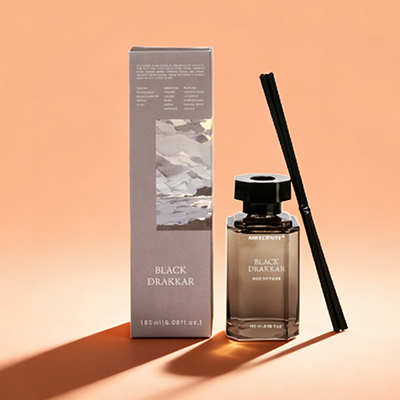
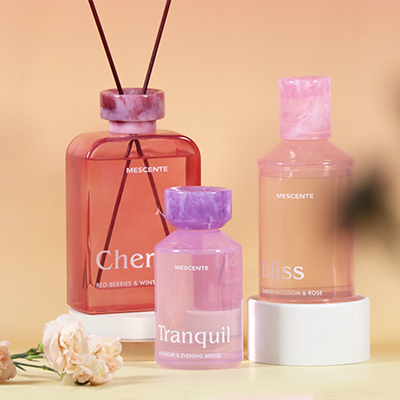
A hotel group approves a 180 ml glass reed diffuser in March, reorders the same SKU in September, and finds the mould has been retired and the new bottle shifts the label position by four millimetres. That failure, not fragrance quality, is what ends most private label relationships.
Custom solutions from a home fragrance manufacturer exist to prevent exactly that outcome. They lock the specification before the first purchase order is issued: vessel tooling, fill weight tolerance, fragrance load, label artwork and carton dimensions, all recorded and reusable for the next production run.
Scent carries the buying decision; specification discipline carries the relationship. Two buyer types dominate custom work. Retail brands need shelf differentiation, and hospitality operators need one scent signature repeated across hundreds of rooms. Their purchase orders look almost identical and their briefs are not. Suzhou M-Scent Arts & Crafts Co., Ltd. (M-Scent) supplies eight categories, from scented candles and reed diffusers to scented stones, room sprays, car fresheners, aromatherapy oils, candle tools and gift sets, which is roughly the span a multi-channel fragrance program touches in a single year.
Custom home fragrance manufacturing covers five controllable variables: fragrance formula and load, vessel and closure, wick or wicking medium, label and decoration, and outer packaging. Each one is quoted separately, because each carries its own sampling cycle, minimum order quantity and production window.
A private label reed diffuser on a stock glass bottle leaves the factory 12-18 days after purchase order confirmation, a custom ceramic vessel with a rigid gift box takes 35-45 days, and a new mould takes 55-70 days.
| Customisation lever | What the client specifies | Main supply risk | Indicative MOQ tier |
| Fragrance formula | Scent brief, load percentage, IFRA conformity | Restricted and allergen limits in the destination market | 500-1,000 pieces |
| Vessel and closure | Shape, finish, capacity, lid type | Mould retirement and colour batch drift | 1,000-3,000 pieces |
| Wick or wicking system | Wick type, stick count, diameter | Burn stability and wax pool uniformity | 1,000 pieces |
| Label and decoration | Print method, finish, hazard wording | CLP and Prop 65 wording accuracy | 500 pieces |
| Outer packaging | Box style, insert, pallet footprint | Drop test and freight performance | 1,000 pieces |
Those windows assume approved pre-production samples and a cleared deposit. Chinese New Year and the pre-Christmas peak each add 10-14 days of factory queue time, so programs tied to a fixed retail launch date should be booked one quarter ahead.
Hospitality programs are specified by consistency and service interval. Retail programs are specified by shelf appeal and price architecture. A manufacturer serving both will insist on two separate briefs, even when the fragrance formula is identical.
For hotel buyers, the number that decides a reorder is diffusion duration, not initial scent strength. A 180 ml reed diffuser typically holds a usable scent throw for eight to twelve weeks in a climate-controlled room, and the variables behind scent throw longevity for hotel use are stick count and oil viscosity rather than bottle size.
A 400-room hotel group needs three to five scents, not thirty: one signature for public areas, one for guest rooms, and one or two functional scents for spa, pool or gym. Retail brands work the same way, with a core scent carrying 40-60 percent of volume and seasonal scents rotating around it.
Every formula in that library has to clear the same regulatory gates. The IFRA Standards, most recently the 51st Amendment, cap the concentration of restricted materials and force reformulation when limits tighten. In the European Union, CLP Regulation (EC) No 1272/2008 governs hazard pictograms, signal words and allergen declarations on the label. California's Proposition 65 adds a separate substance list that triggers warning language in the United States.
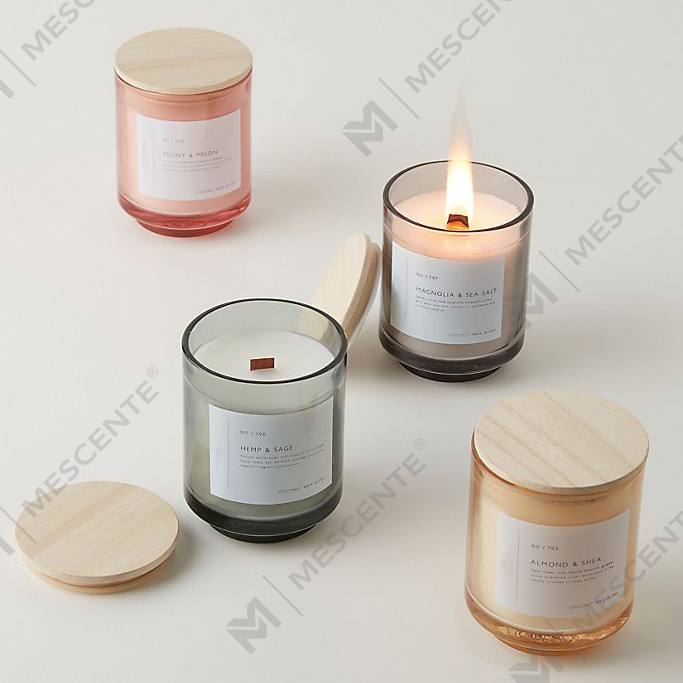
Candle formulation leaves little room for improvisation. Soy wax carries 6-10 percent fragrance oil reliably, while pushing past 10 percent improves the cold throw but frequently produces soot, tunnelling or wick failure. That is why wick sizing is re-tested every time the load changes.
Most custom fragrance orders fail at one of four points: label artwork approved by email without a printed proof, a fragrance load change recorded only in a chat thread, a wick never burn-tested at the final vessel diameter, or a vessel substitution made after tooling without telling the client.
Safety testing follows published standards rather than house rules. ASTM F2417 covers candle fire safety in the United States, while EN 15493, EN 15494 and EN 15426 cover candle safety, safety labelling and sooting behaviour in the European Union. A manufacturer already testing to those standards removes one compliance step for retail and hospitality clients alike.
Three documents decide whether a custom fragrance shipment clears customs cleanly: the safety data sheet, the IFRA conformity statement for the fragrance concentrate, and the finished label artwork. Classification matters just as much, with candles shipping under HS 3406.00 and room perfuming or deodorising preparations under HS 3307.49.
An accurate custom fragrance quote needs eight inputs. Missing any single one of them usually adds a sampling round and one to two weeks to the schedule.
Bundling those eight inputs into one document collapses the usual three-to-five email exchange into a single round, and it lets the manufacturer return a landed-cost estimate instead of a bare unit price.
A stock vessel with a client label usually starts at 500 pieces, a custom fragrance on a stock vessel at 1,000 pieces, and a custom glass or ceramic vessel at 1,000-3,000 pieces because of tooling. A new mould pushes the floor to roughly 5,000 pieces.
Allow eight to twelve weeks: three to four weeks for fragrance and vessel sampling, three to five weeks for bulk production, and two to four weeks for ocean freight. Air freight cuts the final leg to three to five days at roughly four to six times the freight cost.
Yes, and many manufacturers do exactly that. The constraint is contractual rather than technical: channel exclusivity clauses typically run 12 to 24 months and usually cover the scent name, the vessel silhouette, or both.
In the European Union, EN 15493, EN 15494 and EN 15426 cover safety, safety labelling and sooting, with CLP Regulation (EC) No 1272/2008 governing the label itself. In the United States, ASTM F2417 sets candle fire safety requirements and Proposition 65 may add warning language depending on the fragrance formula.

Address:
Building 10, No. 39, Muxu East Road, Mudu Town, Wuzhong District, Suzhou City, Jiangsu Province, China
Contact Details
Phone/WhatsApp:
+86-186 6215 4595
Email:
kaden@m-scent.com
Company
Products
Mobile
